- New generation of no‑code AI tools for developers promises drag‑and‑drop agents, RAG pipelines and LLM fine‑tuning without writing code.
- Sim AI, RAGFlow, Transformer Lab and LLaMA Factory surge across Reddit, Product Hunt and Hacker News as thousands of engineers explore easy workflows.
- Supporters celebrate accessibility and speed, while critics warn of “black box” dependencies and security risks.
The no‑code AI tools for developers movement has exploded in the past 24 hours. From Sim AI’s Figma‑like agent builder to RAGFlow’s retrieval‑augmented generation engine, a suite of platforms is trending across Reddit, X and Product Hunt. These tools promise to democratize advanced AI workflows by removing the need to write Python scripts or wrestle with CUDA drivers. But the hype also raises questions about vendor lock‑in and reproducibility.
The rise of builder-friendly AI platforms
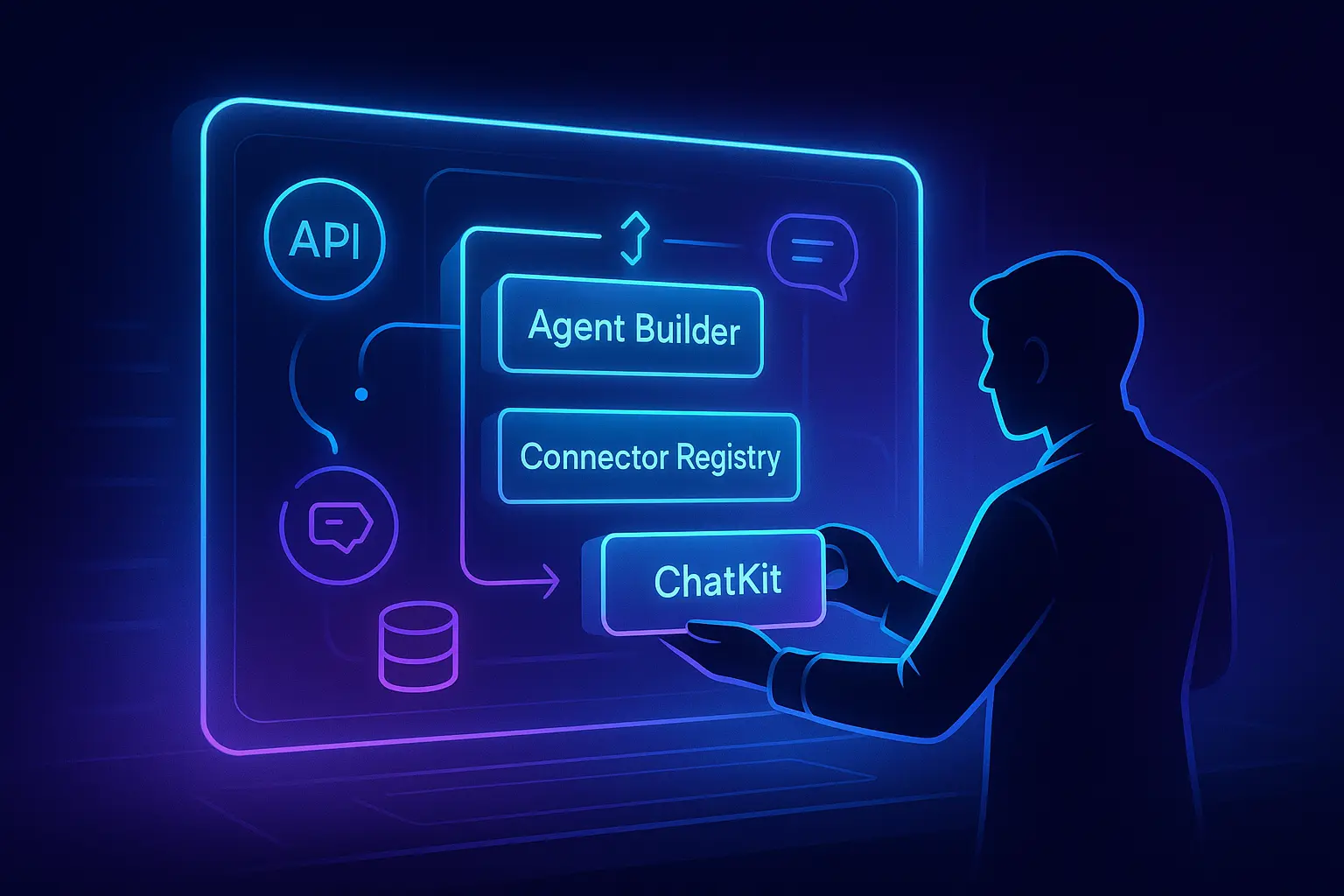
Sim AI, founded by Emir Karabeg and Waleed Latif, has captured attention with a drag‑and‑drop canvas reminiscent of Figma. According to the Y Combinator directory, more than 20,000 developers have built agent workflows on the platform. Users can visually connect language models to tools like Slack, Supabase, Pinecone and Gmail, set triggers and deploy via API or schedule jobs. Its aim: let anyone sketch out an AI agent’s logic and iterate quickly without diving into code.
RAGFlow offers a specialized retrieval‑augmented generation (RAG) pipeline builder. Instead of juggling vector databases and embedding models, users can upload documents, choose an embedding model and connect an LLM. The platform automatically manages chunking, indexing, query processing and summarization. With just a few clicks, non‑engineers can build knowledge bases or chatbots.
Transformer Lab, an open-source workspace for large language models and diffusion models, further broadens the landscape. It provides one‑click downloads of models, fine‑tuning with LoRA or full-parameter methods, RAG pipelines, evaluation tools, diffusion image generation, cross‑platform support (desktop and cloud) and plugin architecture. Use cases range from training a custom ChatGPT to generating high‑resolution images.
LLaMA Factory rounds out the field with a web UI for fine-tuning over 100 LLMs. Designed for beginners, it guides users through selecting a model, adding a dataset, adjusting parameters and launching training. After training, models can be exported to Hugging Face or saved locally. The tool has gained popularity on GitHub, with forks and stars jumping as new models are added.
Viral momentum on social platforms
On r/Artificial and r/MachineLearning, posts sharing Sim AI demos and RAGFlow tutorials have attracted hundreds of upvotes. Users report building Slack bots, knowledge assistants and automation pipelines within hours. Product Hunt listed multiple of these tools among its “Product of the Day,” with comment sections praising their accessibility. On X, AI influencers share video walkthroughs, while on TikTok and YouTube Shorts, creators showcase building agents with no coding.
Hacker News threads debating Transformer Lab’s open‑source approach sparked lively discussion. Some laud the project’s transparency and plugin system; others caution that bundling many features into one tool increases attack surfaces. Meanwhile, GitHub trending lists show a spike in stars for LLaMA Factory and Transformer Lab, signalling developer adoption.
Accessibility vs. control
Advocates argue that no‑code platforms reduce barriers for entrepreneurs, educators and hobbyists. “I spun up a podcast summarizer for my team in an afternoon,” notes one Reddit user. With built‑in evaluation dashboards, even non-experts can monitor model performance. Startups like Sim AI and RAGFlow also provide training and hosting, removing infrastructure headaches.
However, critics caution that offloading complex workflows to closed platforms can create black boxes. There are concerns about data privacy, especially when confidential documents are uploaded to third‑party services. Security researchers warn that drag‑and‑drop connectors could inadvertently expose secrets if misconfigured. Others worry about vendor lock‑in: if a platform shuts down or changes pricing, exported workflows may break.
Another tension lies in understanding. By abstracting away code, no‑code tools risk turning users into “button pushers” who cannot debug or optimize. This may encourage shallow understanding of AI’s limitations. On the flip side, proponents argue that these tools serve as entry points; once comfortable, users can graduate to writing code or customizing under-the-hood.
Behind the scenes: How the tools work
Sim AI uses a modular runtime where each node on the canvas represents a model call or API invocation. Under the hood, it orchestrates parallel calls, handles rate limits and logs each step. RAGFlow builds indexes with vector databases like Pinecone, uses embedding models to encode documents and orchestrates calls to LLMs for retrieval and generation. Transformer Lab leverages Hugging Face libraries for model loading and LoRA; it exposes fine‑tuning parameters like learning rate and context length. LLaMA Factory runs on a backend of Torch and PEFT libraries, enabling LoRA as well as full-parameter fine-tuning. It encapsulates training loops, evaluation metrics and inference endpoints behind a web UI. Developers exploring alternative ecosystems can also check out Genkit’s new Go framework, which brings similar agentic and RAG workflows into the Go developer world, offering strong performance and type-safe pipelines.
The road ahead
The no‑code AI movement appears poised to grow. Sim AI plans to expand its connector library and offer on‑premises hosting for enterprise clients. RAGFlow is adding multi-modal retrieval to handle images and documents. Transformer Lab developers are working on community plugins for dataset creation and synthetic data. LLaMA Factory maintainers seek to integrate reinforcement learning from human feedback (RLHF) and support for new models as they emerge.
As more teams adopt these tools, the challenge will be balancing ease of use with transparency and control. No‑code does not mean no thinking. But with the right safeguards and education, these platforms could bring sophisticated AI into the hands of millions.