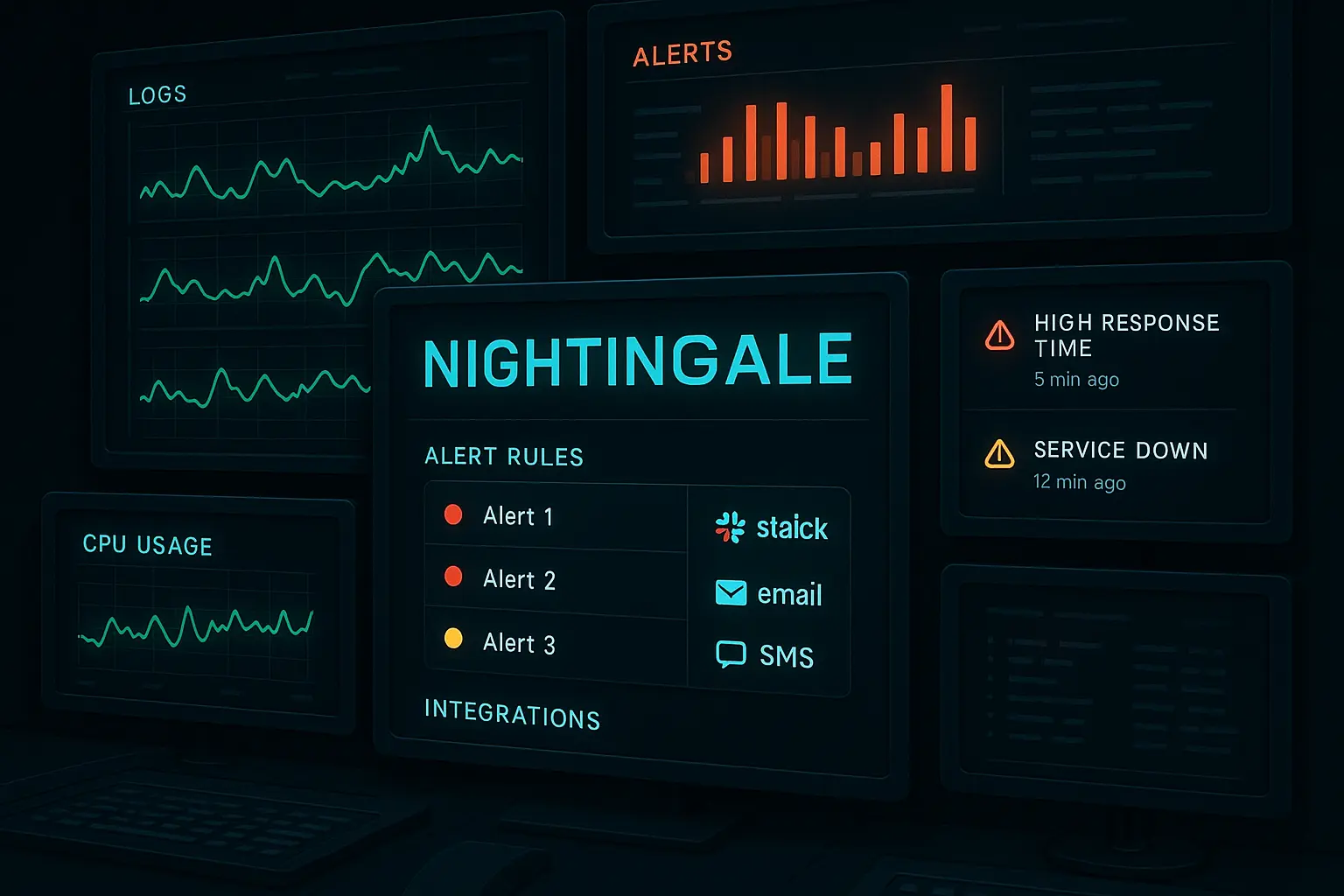
- Nightingale is gaining momentum on GitHub and tech forums as a monitoring and alerting platform with built‑in rules, dashboards and integrations, drawing comparisons to Grafana but with a focus on alerts.
- The project’s ability to ingest metrics and logs from various exporters and push notifications via multiple channels is exciting DevOps teams; early adopters share success stories across Reddit, YouTube and X.
- Community buzz revolves around Nightingale’s open‑governance model under the China Computer Federation and its promise of sustainable development with thousands of users.
Move over, Grafana—it’s alerting’s time to shine. Meet Nightingale, an open‑source monitoring and alerting platform that’s been quietly building a fan base. In the past 24 hours, the project has crept up GitHub’s trending page, and discussions in r/DevOps have praised its simplicity and flexibility. A screenshot of a Nightingale dashboard hit the front page of Hacker News, prompting curiosity and a wave of installs. In a sea of observability tools, Nightingale stands out for its focus on alerts and its robust feature set.
What Nightingale brings to the table
Nightingale isn’t trying to replace Grafana outright; it complements it. While Grafana excels at visualization, Nightingale focuses on monitoring and alerting. It ships with built‑in alerting rules, metric descriptions and dashboards for a variety of databases and middleware, including MySQL, PostgreSQL, Redis, MongoDB, RabbitMQ, and Linux system metrics. Out of the box, you can plug it into your infrastructure and start receiving meaningful alerts without crafting expressions from scratch. This makes it appealing for smaller teams and rapid deployments.
The platform integrates with common collectors like Categraf, Telegraf, Datadog‑agent and Prometheus exporters. It supports high‑cardinality metrics and log ingestion, letting you apply alerting rules to both structured metrics and textual log patterns. Once an alert triggers, Nightingale can send notifications through various channels: email, Slack, DingTalk, SMS and more. Advanced features like inhibit and mute allow you to suppress noise, while event relabeling and subscriptions let you tailor alerts to the right teams.
Why it’s trending now
Nightingale’s development has been steady for years, but a recent release (v8.3.1) added log-based alerting and multi-source dashboards, catching the attention of observability enthusiasts. A post on r/sysadmin titled “Stop drowning in alerts” showed a setup that reduced false positives by 70 percent using Nightingale’s inhibit rules. The post went viral, and within hours, several YouTube channels uploaded quickstart videos. The GitHub repository spiked in stars, and long-time users chimed in with endorsements.
Beyond features, the project’s governance fuels interest. Nightingale is maintained by the Open Source Development Committee of the China Computer Federation (CCF) and is supported by thousands of community users. This open model differs from single‑vendor projects and suggests long‑term sustainability. People also appreciate that the software is fully open source—no hidden “enterprise” tiers. Contributors are adding language translations, new exporters and integrations with tools like Loki and OpenTelemetry.
Use cases and success stories
On Reddit, a DevOps engineer at a mid‑sized gaming company shared how Nightingale’s built‑in PostgreSQL dashboard flagged a slow replication lag that their existing setup missed. The timely alert prevented a cascade of timeouts during a game update. Another user on X posted a video showing Nightingale detecting unexpected spikes in Kubernetes pod restarts, with the incident resolved in minutes. A YouTuber compared Nightingale’s alerting flexibility to PagerDuty’s while noting that it comes without per‑host licensing fees.
Teams appreciate that they can start small and grow. Nightingale’s built‑in rules cover common patterns, but users can write custom scripts in Go or JavaScript for advanced scenarios. The UI is straightforward: define a rule, set thresholds, choose notification mediums and watch it in action. For organizations that already use Grafana or Kibana for visualization, Nightingale can coexist; it supports Grafana dashboards for charts and uses its own UI for alerts.
Challenges and criticisms
Nightingale is not a silver bullet. Its installation can be more involved than SaaS solutions. You need to run a Go binary, configure collectors and maintain a database. The documentation, though improving, still has gaps. Some users report difficulty understanding inhibit and subscription semantics. Others note that the community is primarily Chinese, so English support on forums can lag. However, the maintainers have welcomed international contributors and recently added an English Discord server.
Another challenge is scaling. While Nightingale handles medium workloads well, very large environments may require horizontal scaling and sharding. The roadmap addresses this with an upcoming multi‑tenant architecture and integration with vector databases for high‑cardinality metrics.
The broader picture
The buzz around Nightingale reflects a broader trend: developers want simpler alerting solutions that don’t lock them into proprietary ecosystems. Tools like Prometheus and Grafana solved time series storage and visualization; now alerting is getting its moment. Nightingale’s success may push other projects to improve their alerting modules or offer standalone alerting solutions. Similarly, in the AI space, turnkey frameworks like Pathway llm-app are gaining traction by simplifying retrieval-augmented generation pipelines — showing how developers increasingly value open-source tools that remove infrastructure headaches.