Agents as co‑workers – Multi‑agent systems are evolving from science projects into digital co‑workers that can collaborate, negotiate and accomplish tasks autonomously.
AI as a physical force – AI is moving beyond screens into robots, drones and smart sensors, while infrastructures shift from centralized data centers to globally interconnected networks.
New bottlenecks and opportunities – The biggest barriers are no longer models but compute supply and data center capacity. Meanwhile, vertical AI in healthcare and finance is poised to deliver real‑world impact
Introduction
“Agents will become your digital co‑workers,” said Aparna Chennapragada, Microsoft’s chief product officer for AI, in a recent interview. Her statement encapsulates a sweeping shift in the AI industry: we are moving from isolated chatbots to multi‑agent systems that can delegate, coordinate and collaborate like a human team. Already, early adopters are deploying swarms of specialized agents that automate customer support, project management and even software development.
The multi‑agent AI trend is part of a broader transformation of how AI is built and used. It intertwines with trends like AI‑first infrastructure, the physical embodiment of AI and the rise of specialized models for healthcare and finance. In this article, we explore the factors driving these changes, the emerging opportunities and the challenges that remain.
What’s New
Multi‑Agent Systems
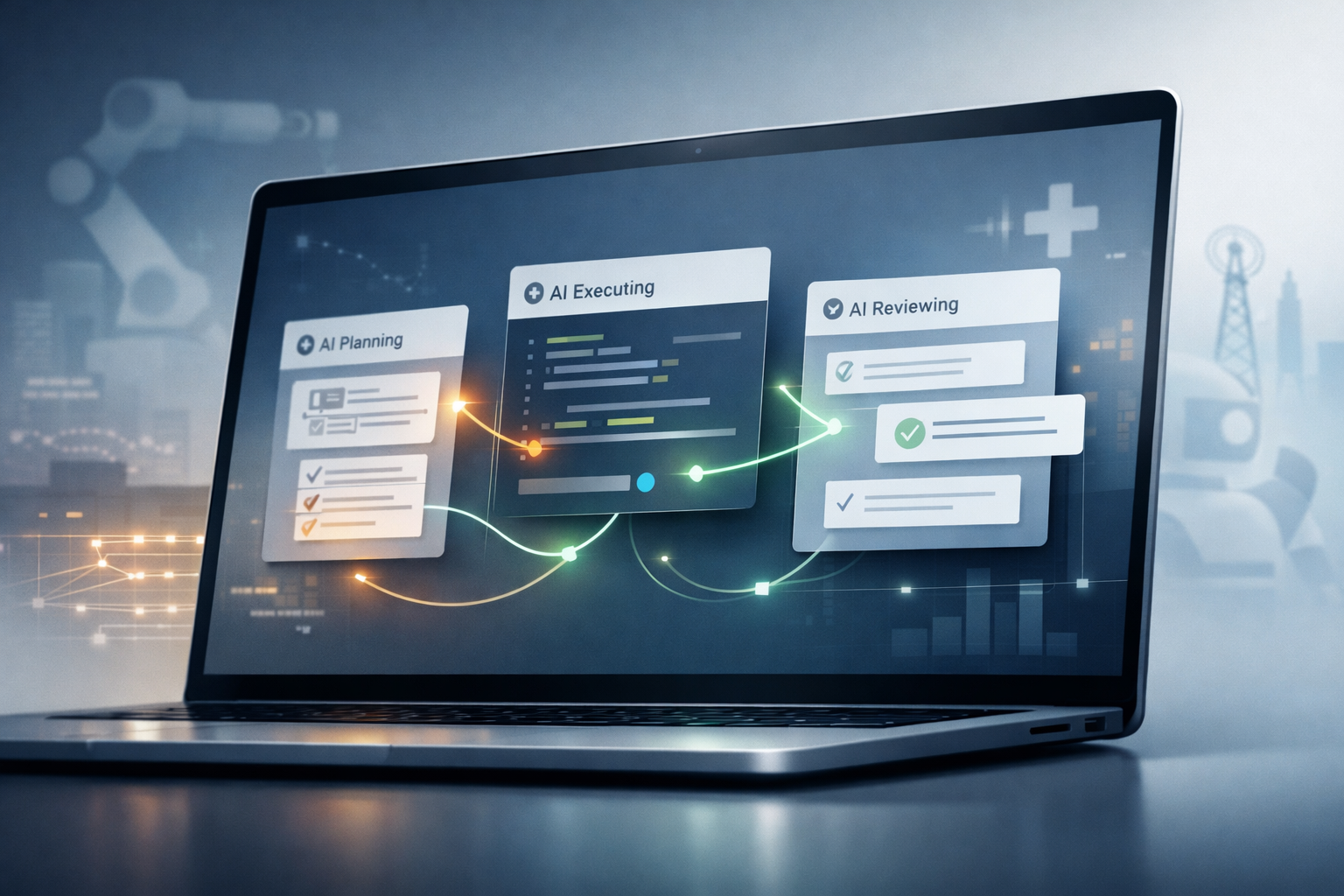
According to a report by FPT Software, multi‑agent systems (MAS) are “emerging as the next frontier” after large language models. Unlike single agents that handle a user’s request from start to finish, MAS distribute tasks among specialized agents. For example, one agent may handle data retrieval, another may generate a draft, and a third may critique and refine the output. FPT notes that MAS can coordinate complex workflows and deliver productivity boosts. In one case study, a Canadian insurer deployed a multi‑agent platform that increased sprint velocity by 30 % and reduced defects by 200 %.
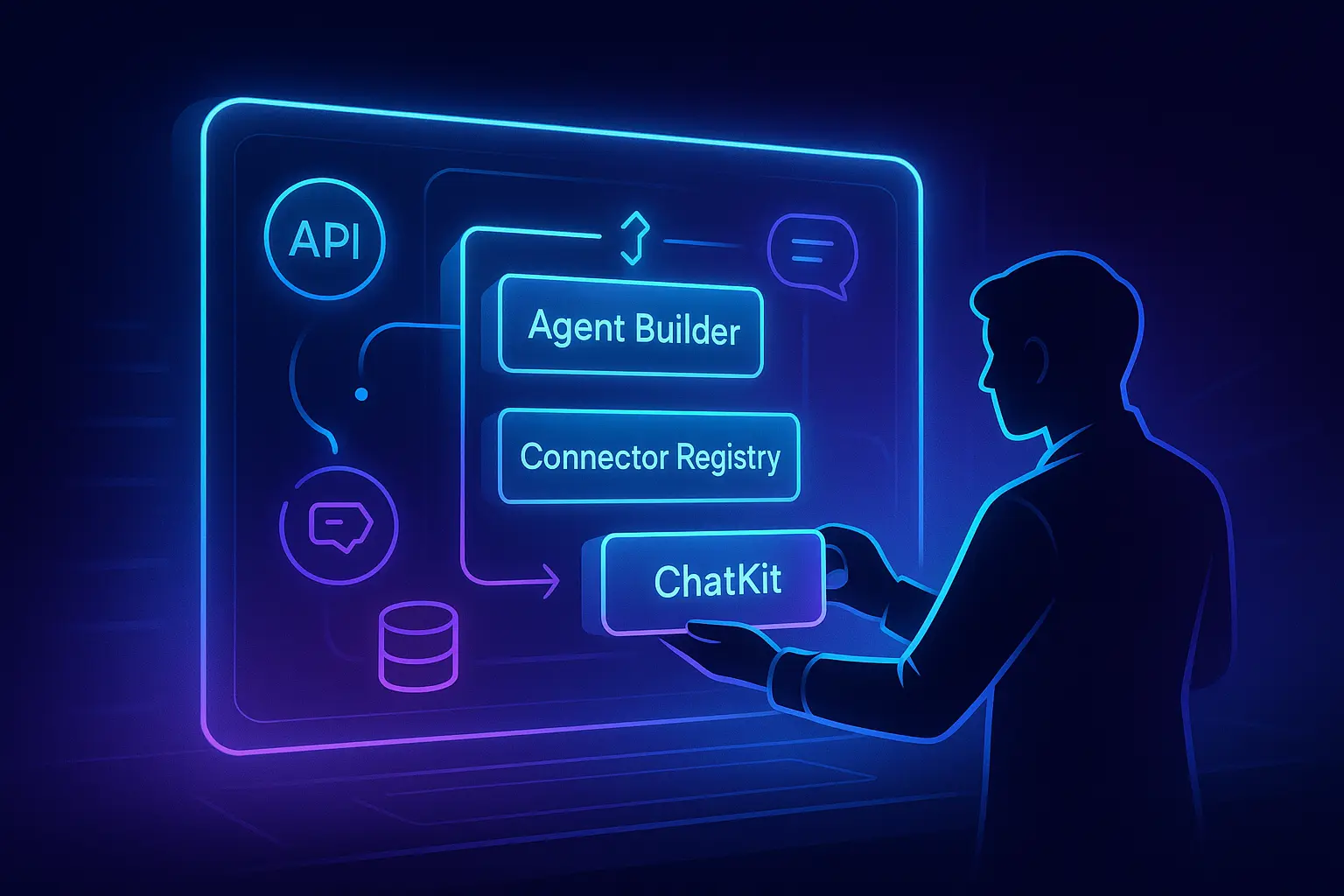
Developers are also building agent frameworks that make it easier to orchestrate such systems. Tools like LangChain, Autogen and CrewAI allow programmers to define agent roles, specify communication protocols and handle failures. Microsoft’s own Copilot Studio includes features for chaining multiple models together. The key innovation is enabling agents to call each other, form ad‑hoc teams, and recursively plan – a dramatic shift from the linear “prompt‑response” paradigm.
AI Goes Physical
Deloitte’s Tech Trends report observes that intelligence is “no longer confined to screens; it’s gone physical”. Cities are experimenting with drones to inspect infrastructure, warehouses deploy autonomous shuttles, and hospitals test robotic assistants. FPT’s article echoes this, arguing that AI will integrate with Internet of Things (IoT) devices to create “AI agents that perceive, learn and adapt” in real‑world settings. This shift from pure software to cyber‑physical systems changes the design of agents: they must handle noisy sensors, plan under uncertainty and interact safely with humans.
AI‑First Infrastructure & Bottlenecks
The old narrative of AI innovation focused on model architectures. In 2026, the bottleneck is hardware and infrastructure. A Reuters analysis notes that the next constraint is not chips per se but data center capacity – land, electricity and skilled labour. Modern AI workloads require huge amounts of electricity and cooling. While chip makers like Nvidia keep improving performance, the deployment of multi‑agent systems can send token costs spiralling for enterprises. Organizations now orchestrate fleets of agents across distributed cloud networks, effectively managing a “silicon workforce”.
To address these bottlenecks, providers are building smarter, distributed infrastructure. Instead of constructing ever larger monolithic data centers, companies like FPT and Microsoft advocate for globally connected networks that dynamically route tasks to where electricity is cheap and latency is low. IDC forecasts that by 2030, nearly half of enterprises will orchestrate agents at scale, and 70 % will prioritize aligning technology investments with measurable business outcomes.
Vertical AI in Healthcare & Finance
Another trend is the emergence of domain‑specific generative AI. Microsoft highlights how generative AI is moving into real‑world patient care: its Diagnostic Orchestrator solved complex medical cases with 85.5 % accuracy, and generative models have cut clinicians’ documentation time. In finance, banks use AI to hyper‑personalize customer experiences, with expectations that more than 90 % of queries will be resolved by AI by 2026. These vertical systems often incorporate multiple agents: one agent summarizes patient records, another suggests diagnoses, and a third checks for compliance.
Visualizing the trend
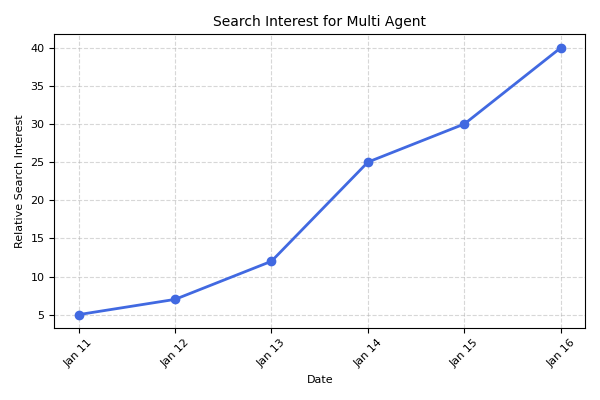
Google Trends data shows a steady rise in searches for “multi‑agent AI” during January 2026. Interest spiked after major conferences discussed agent frameworks, particularly in the U.S., India and China. The chart below illustrates the growing curiosity:
Business Model & Market Fit
The shift to MAS changes the economics of AI. When single agents handled all tasks, companies paid per token or per call. In MAS, the cost is distributed across multiple specialized agents that may share prompts and results. This can reduce the total cost per outcome, as agents re‑use information and avoid redundant computation. It also opens up new business models: agent marketplaces where developers sell specialized agents; subscription plans for orchestration frameworks; and revenue‑sharing arrangements between agent providers and platform operators.
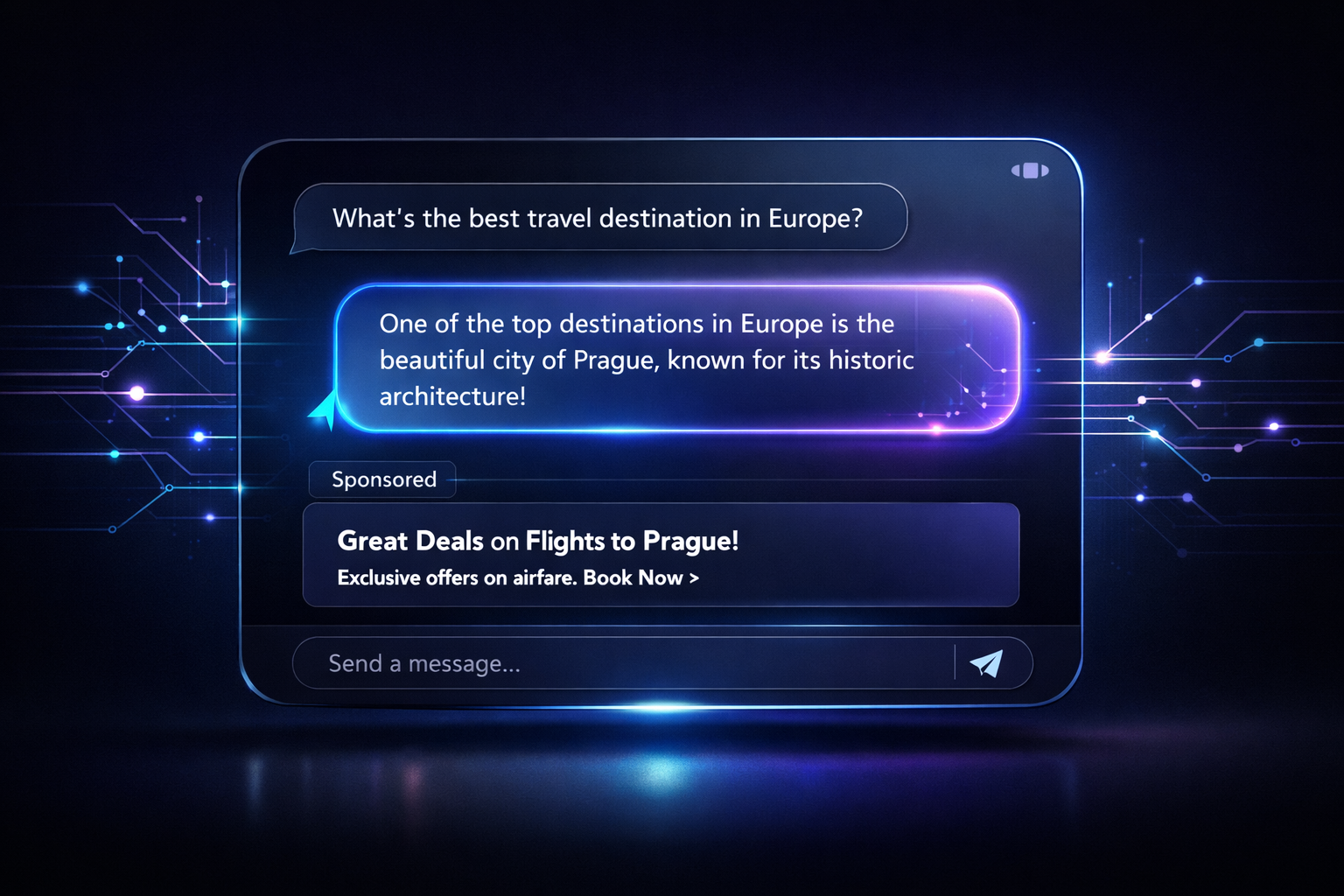
Microsoft’s Chennapragada imagines small marketing teams running global campaigns thanks to agents that handle data collection, segmentation and personalization. FPT’s report echoes this: by 2030, 45 % of organizations are expected to orchestrate multiple agents across departments. The economic promise lies in automation of complex workflows without hiring more human staff. However, the revenue model must account for infrastructure costs: continuous inference across agents can be expensive. This pressure to balance scale and cost echoes developments in consumer AI as well, where platforms are experimenting with alternative monetization strategies such as ChatGPT ads to subsidize growing usage.
Developer & User Impact
For developers, MAS means thinking like a team lead. Instead of writing monolithic prompts, programmers design roles, negotiate interfaces and manage coordination. Tools like LangChain’s agents API or Anthropic’s “coach and critic” patterns help developers break problems into smaller tasks. Developers also need to monitor agent miscommunication and prevent cascade failures where one agent’s mistake propagates.
Users may experience MAS in subtle ways. A customer support conversation might seamlessly hand off from a triage agent to a billing agent to a retention agent. In education, a tutoring system could pair a teacher‑agent with a student‑agent that models the learner’s behavior. The experience becomes smoother, more personalized – but also more opaque, as dozens of processes run behind the scenes. Ensuring transparency and user control will be vital.
Comparisons
While MAS is gaining traction, other AI trends are racing forward. The “AI goes physical” trend brings robots and drones into mainstream operations, requiring integration with MAS. The “vertical AI” trend creates specialized models that may or may not be agentic. According to Reuters’ analysis, venture capital is still flowing into AI labs but IPOs are delayed. At the same time, the cost of building AI is shifting from chips to land and electricity, making infrastructure innovations crucial.
Community & Expert Reactions
The developer community is simultaneously excited and overwhelmed. One X user remarked, “Agents talking to agents… when did we become managers of software?”
“Agents talking to agents… when did we become managers of software?”
— Developer on X
Academic conferences buzz with talk of agentic AI but also warnings. Vasu Jakkal, Microsoft’s vice president of security, cautions that every agent must have clear identity and access controls to prevent misuse. Researchers worry about emergent behaviors: when agents collaborate, they may discover unexpected strategies or circumvent safety restrictions. Deloitte’s report urges leaders to balance investment in technology (93 %) with investment in talent (7 %), suggesting that training human teams to supervise agents is just as important as building the agents themselves.
Risks & Challenges
Key challenges for MAS include:
Security – Agents can inadvertently leak data to each other or external services. Access controls and audit trails become more complex as the number of agents grows.
Alignment – Aligning the objectives of multiple agents is harder than aligning a single model. Agents may act in ways that optimize local objectives while harming the global goal.
Infrastructure costs – Running many agents concurrently can spike cloud bills. Enterprises must optimize orchestration strategies to minimize redundant computation.
Regulation – Multi‑agent ecosystems may challenge existing AI regulations that assume clear delineation of responsibility. New guidelines will be needed to assign liability when agent teams make mistakes.
Road Ahead
Looking forward, MAS will likely merge with other trends. In health care, agentic systems could coordinate between diagnostic models, treatment recommendation models and hospital scheduling software. In finance, robo‑advisers might collaborate with fraud detection agents and compliance agents. As quantum computing matures, some agents may use quantum circuits to solve parts of a problem, while classical agents handle the rest. The growing emphasis on AI ethics and safety will push developers to design agents that can explain their actions and ask for human help when uncertain.
The infrastructure landscape will also evolve. IDC predicts that by 2030, 70 % of organizations will align AI investments with measurable business outcomes, suggesting that MAS must prove their ROI. Hybrid cloud and edge architectures will allow agents to run closer to data sources, reducing latency and energy consumption. Meanwhile, open‑source communities will build agent registries and marketplaces, democratizing access to specialized capabilities.
Final Thoughts
The year 2026 marks an inflection point. Multi‑agent systems are no longer experimental; they are becoming a practical way to orchestrate complex tasks across digital and physical domains. To harness their potential, organizations must invest in both technology and people. They must build smart infrastructure, enforce security policies, and cultivate teams capable of managing a swarm of intelligent helpers. Ultimately, the promise of MAS is not to replace humans but to free them from tedious tasks, allowing creativity and strategy to flourish.