- Google’s Go‑first AI toolkit reaches its first stable release with type‑safe flows
- Developers celebrate unified model interfaces, tool calling and retrieval features
- Signals a new era for Go as a language of choice for production AI systems
Go developers have long been bystanders in the generative AI revolution, watching Python and JavaScript command the tooling spotlight. That changed when Google quietly dropped Genkit Go 1.0, the first stable release of its open‑source framework for building AI‑powered applications in Go. In the twenty‑four hours since launch, the project has climbed GitHub’s trending chart, been dissected on Hacker News and spurred a torrent of blog posts. For a community that prides itself on simplicity, performance and type safety, Genkit’s arrival feels like a watershed.
What happened
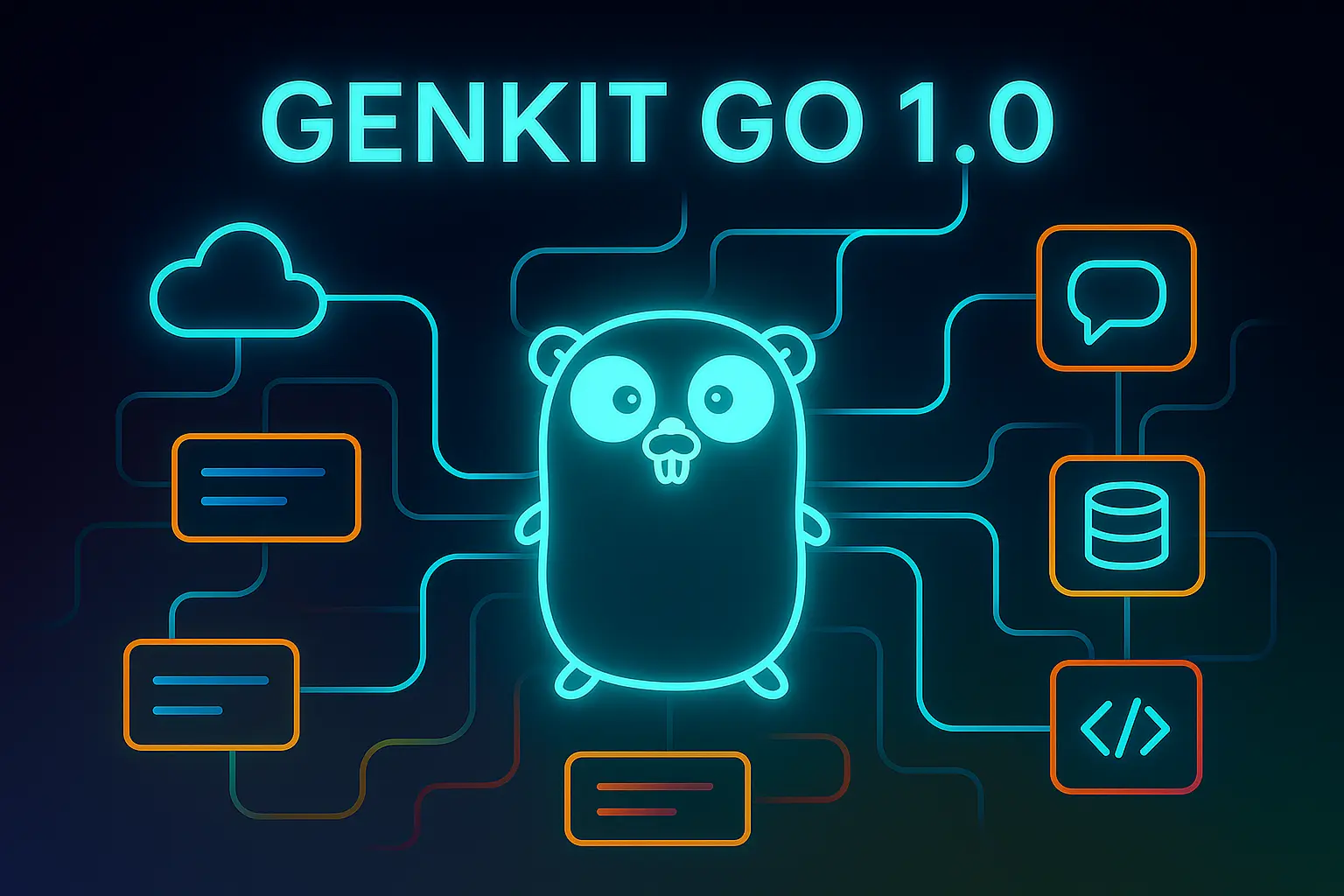
Genkit Go packages together a suite of tools aimed at helping Go developers incorporate large language models, generative flows and retrieval systems into their applications. At its core, Genkit offers a unified interface for accessing different AI providers. Developers can swap between models from Google, OpenAI, Anthropic or local models with minimal code changes. The framework emphasizes type‑safe flows: you define strongly‑typed functions representing AI interactions, and Genkit enforces input and output contracts. This approach reduces runtime errors and increases confidence when chaining multiple model calls.
Among Genkit’s headline features is tool calling, which allows models to invoke external functions for tasks like database queries, API calls or calculations. Coupled with retrieval‑augmented generation (RAG) support, Genkit makes it straightforward to build systems that fetch relevant documents from vector stores, feed them into a model and return grounded responses. The release includes a developer UI, a command‑line interface and integration with cloud deployment tools. Google also packaged an init command that bootstraps common setups and connects your project to popular AI assistants, allowing you to chat with your codebase.
Why it matters
Go has long been a mainstay for backend services thanks to its speed and concurrency model, but it lacked comprehensive AI tooling. Genkit fills that gap, enabling developers to build production‑ready AI features without abandoning their preferred language. The framework’s emphasis on type safety resonates with Go’s philosophy: by ensuring that model inputs and outputs conform to defined structures, Genkit reduces the risk of runtime panics or logic errors. This is particularly important in mission‑critical applications where hallucinations could have serious consequences.
The unified interface means teams can experiment with different models and providers without rewriting code. In a landscape where new models appear frequently, this flexibility is valuable. Tool calling bridges the gap between generative models and business logic, allowing AI to trigger actions like sending emails or updating records. RAG support addresses the common challenge of grounding model responses in trusted data, a key requirement for enterprise adoption. Altogether, Genkit positions Go as a first‑class citizen in the AI ecosystem.
Community reaction
The Go community reacted with enthusiasm and curiosity. Blogs and forums lit up with tutorials on setting up Genkit, building chatbots and integrating vector databases. On X, Go maintainers shared screenshots of their first successful AI interactions, celebrating the ease of configuring flows and swapping models. Hacker News hosted discussions comparing Genkit to Python frameworks like LangChain and Semantic Kernel. Some commenters noted that Genkit’s strict typing could make it more robust but might require additional boilerplate.
A recurring theme in community feedback is excitement about the developer UI and CLI. The visual interface allows developers to inspect and debug flows, while the command‑line tools simplify deployment and testing. There is also appreciation for Google’s commitment to open source: by releasing Genkit under a permissive license, the company invites contributions and signals that Go will continue to be part of its AI strategy. Critics, however, caution that the ecosystem around Go is still young, with fewer plug‑ins and third‑party integrations compared to established languages.
Challenges and open questions
Genkit’s success will depend on adoption beyond hobby projects. Enterprises evaluating the framework must consider integration with existing Go services, security implications of model calls and the cost of using commercial providers. While Genkit abstracts away provider differences, performance and cost characteristics still vary widely. Additionally, the RAG capabilities rely on external vector databases and search infrastructure, which may require additional setup. The tool calling feature is powerful but could lead to complex flows if misused; developers will need to design carefully to avoid messy spaghetti logic.
There is also the question of model updates. As providers release new versions and open‑source models improve, Genkit will need to stay current. The framework supports self‑hosted models, but managing them at scale can be challenging. Documentation and community support will be crucial to help newcomers navigate these complexities. Some developers have expressed a desire for deeper integration with Go’s generics and for more examples of production‑ready patterns.
What’s next
Google has hinted at additional features on the horizon, including more built‑in tools, better monitoring and tracing, and expanded RAG options. Community contributions are likely to expand the plug‑in ecosystem, adding connectors for additional databases, messaging systems and third‑party APIs. As more companies adopt Go for AI workloads, expect benchmarks comparing performance across frameworks. For now, Genkit Go 1.0 is a strong signal that the Go ecosystem is ready to play in the big leagues of generative AI.