- Open‑source project turns large language models into software‑controlling agents
- Viral across developer forums and social feeds, with users celebrating its “trackpad‑precise” automation
- Raises questions about trust, safety and the future of work
introduction
Bytebot is the latest open‑source phenomenon turning heads in the machine learning world. Within hours of its release, the toolkit spread across developer subreddits, GitHub Trending and TikTok tutorials, all marveling at how Bytebot spins up a fresh virtual desktop for large language models to complete tasks using a trackpad, keyboard and screen. This vision of autonomous agents meticulously navigating a full computer environment has struck a nerve: some see it as a productivity revolution, others as a harbinger of runaway automation.
What happened
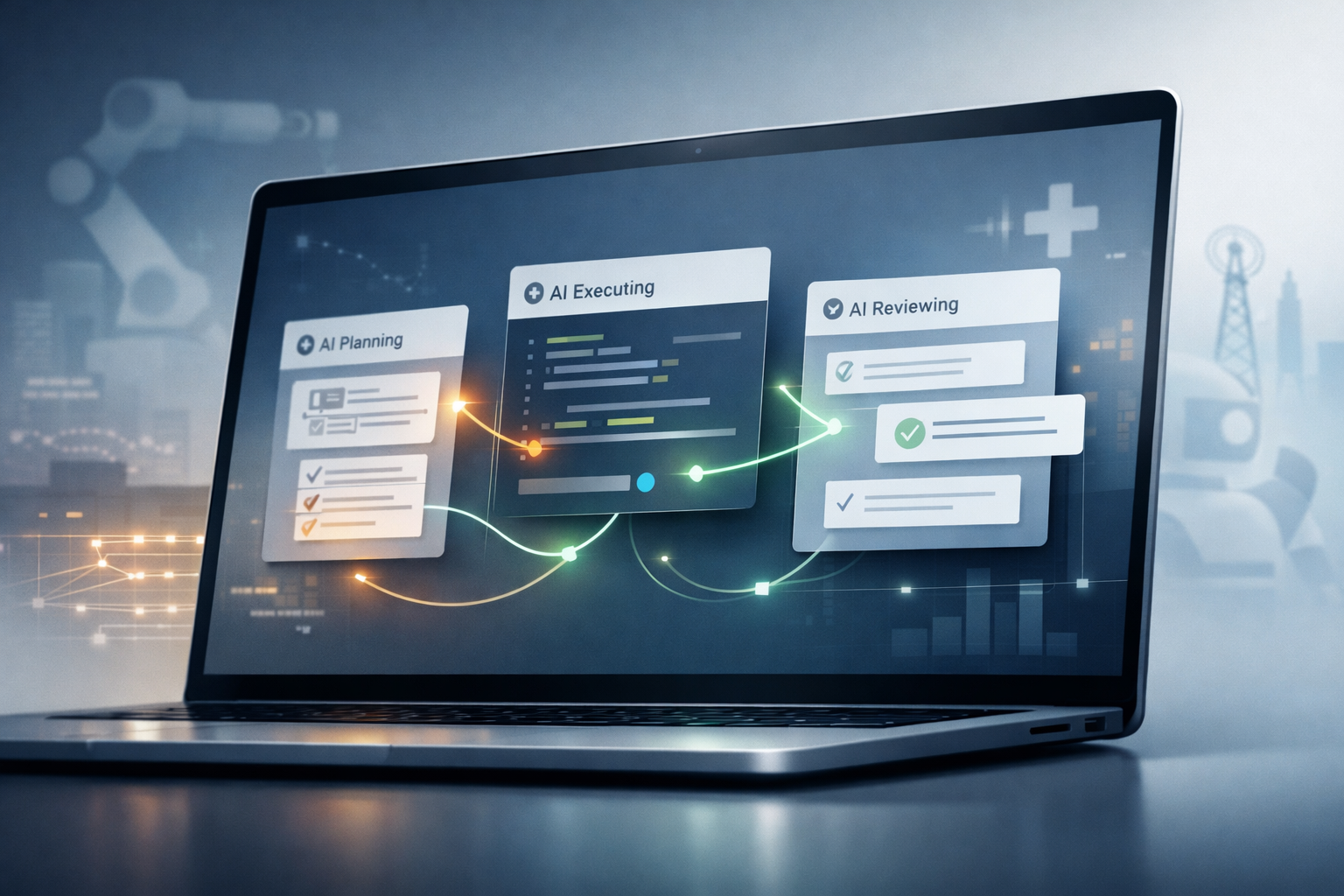
Bytebot arrived as a self‑hosted agent framework that boots a sandboxed computer and uses a trackpad, keyboard and screen to carry out tasks across multiple apps. You describe a task in natural language, and Bytebot loads a browser, file system, password manager, terminal and code editor inside a virtual machine. The agent then executes clicks and keystrokes with pinpoint accuracy, imitating a human worker. If it encounters a situation it can’t handle, it pauses and waits for you to guide it, then resumes from where it left off. The developers behind the project claim it scales from a single agent to hundreds, orchestrated through a simple interface.
This approach differs from other agentic frameworks that route API calls or headless browser sessions. By giving the model a fully fledged computer, Bytebot sidesteps constraints of web APIs and connects to any application you can install. Early adopters highlight how it automates file renaming, spreadsheet tidying, email drafting, and even light coding tasks. The built‑in password manager ensures secure authentication for services requiring logins, while the terminal allows deeper system operations. The entire environment runs inside a sandbox, limiting potential damage if the model misbehaves. A related project, Bytebot OS, pushes this concept further by turning agents into full “digital employees” with persistent desktops you can monitor and even step into when needed.
Why it matters
The excitement around Bytebot reflects broader fascination with turning large language models into truly useful co‑workers. In many communities, the promise of “agents that can do real work” has been high, but early tools often struggled with reliability and access to proprietary apps. Bytebot tackles this by giving the model a human‑like interface: it sees the screen, moves the cursor, and presses keys. This design enables integration with legacy enterprise software, creative tools and niche utilities that expose no API.
Developers are already experimenting with chaining Bytebot agents together, assigning one to gather market research, another to crunch numbers in a spreadsheet and a third to draft summaries. Such orchestration hints at future workplaces where a swarm of AI workers coordinate to deliver complex projects under human supervision. The tool’s open‑source license further fuels innovation, allowing hackers to customize the environment, add specialized plug‑ins or incorporate local models.
Community reaction
Reaction to Bytebot has been intense and mixed. On GitHub, the repository shot up the trending lists as thousands of developers starred it and forked it to build their own experiments. In r/MachineLearning and r/Artificial subreddits, long comment threads alternated between awe and skepticism. Many praised the elegant interface and accuracy of the cursor movements, noting how the agent even hovers over UI elements to read tooltips. Others raised concerns about security: giving an AI access to your password manager and file system could be risky if the model hallucinates commands or goes rogue. Some suggested running Bytebot only on disposable virtual machines with no access to sensitive accounts.
On X, influencers shared clips of Bytebot logging into online banking portals to download statements, composing professional emails in Outlook and even navigating design software to resize images. Memes compared the tool to “Clippy on steroids” and joked that future interns might be replaced by swarms of Bytebot instances. TikTok creators posted tutorials showing how to spin up Bytebot on a cloud server and connect it to their existing prompt engineering workflows. The cross‑platform virality gave Bytebot an aura of inevitability: a watershed moment for agentic AI.
Safety and governance questions
The prospect of autonomous software agents controlling a full desktop raises thorny issues. Bytebot’s creators stress that each agent runs in a secure sandbox and cannot harm your host system. Yet critics point out that if the underlying language model misinterprets instructions, it could inadvertently delete files, send embarrassing emails or enter infinite loops. There are also broader concerns about workforce displacement: if a handful of engineers can deploy hundreds of agents to perform administrative work, what happens to entry‑level jobs?
Regulatory frameworks for AI often focus on data usage and model outputs; they rarely address scenarios where a model can execute arbitrary commands on a computer. As Bytebot and similar projects gain traction, policymakers may need to rethink guidelines for safe deployment. Some propose mandatory audit logs for agent actions, while others argue for built‑in guardrails that limit operations to whitelisted applications. There is also debate around who bears responsibility if an agent causes harm: the developer, the model provider, or the user who launched it?
What’s next
The Bytebot community is already working on plugins that connect the agents to physical devices like printers and IoT sensors, expanding the scope beyond digital workflows. There is also talk of integrating Bytebot with other agent frameworks to allow multi‑agent collaboration, where one agent manages data retrieval, another handles reasoning, and a third acts on the desktop. Researchers are exploring reinforcement learning techniques to teach agents better “etiquette” when interacting with user interfaces, making them less error‑prone.
Early enterprise pilots hint that Bytebot could be particularly useful in sectors like finance, legal services and healthcare, where legacy applications abound. However, adoption will hinge on robust governance mechanisms and clear proof that the benefits outweigh the risks. As the open‑source movement iterates on the concept, expect copycats, competitors and entirely new agent paradigms. For now, Bytebot stands as a fascinating glimpse of an agentic future.