-
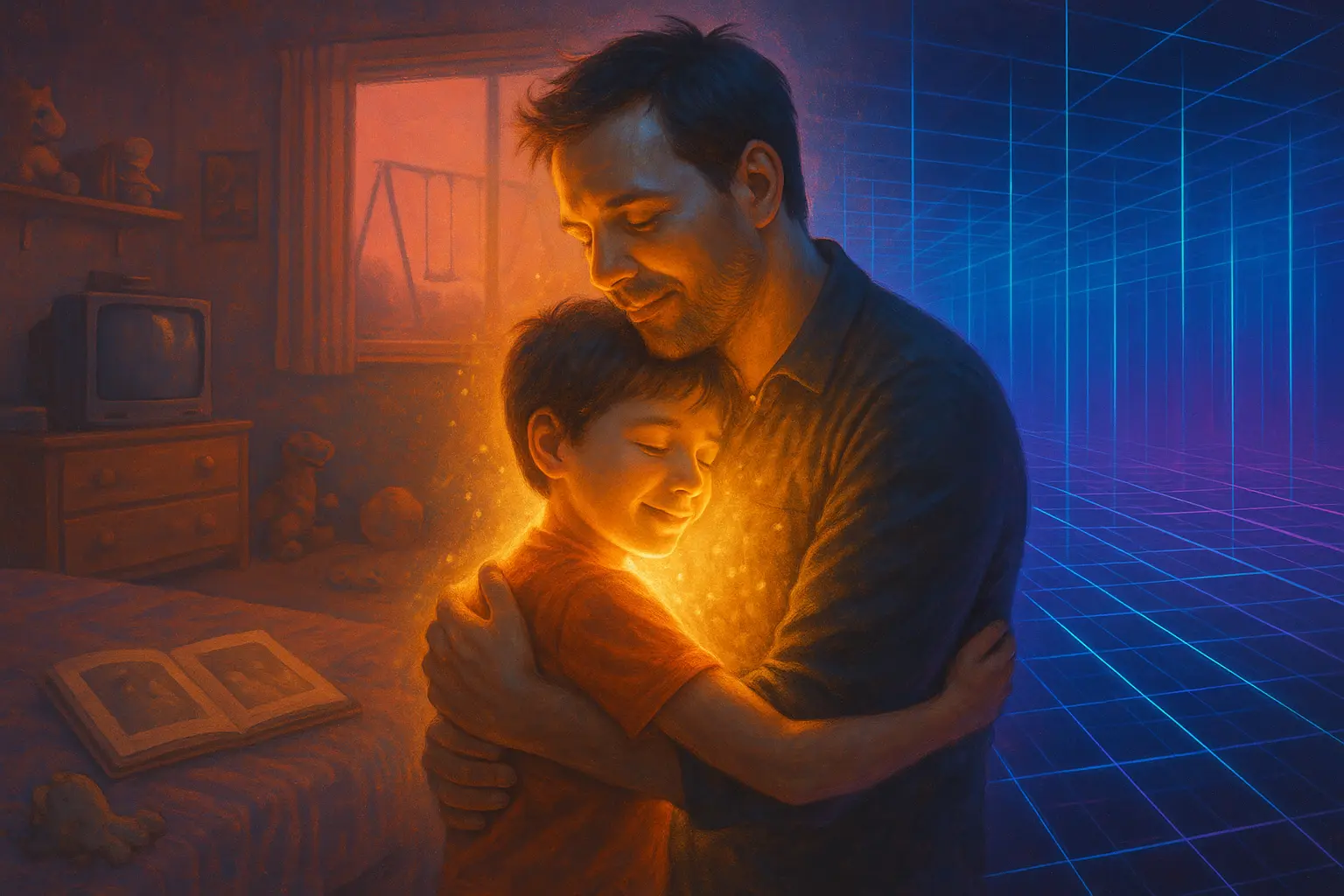
Nostalgia meets AI: Netizens are using Google’s Nano Banana module to create photorealistic images of themselves hugging their younger selves, blending childhood memories with futuristic tech.
-
Celebrities jump in: Politician Shashi Tharoor and influencers across Reddit, X and TikTok share their own “hug” images, fueling virality.
-
Why it matters: The trend shows how generative AI can rapidly spawn cultural movements, raising questions about privacy, deepfakes and the commercialization of personal nostalgia.
The Hug my younger self trend has erupted across the internet over the past 24 hours, as millions of users conjure AI-generated images of their current selves embracing their childhood selves. Powered by Google’s Gemini imaging engine and its free Nano Banana module, the trend taps into deep nostalgia while demonstrating the democratization of sophisticated image synthesis. As politicians, influencers and everyday people flood platforms with touching, funny and sometimes weird “hug” photos, the viral phenomenon raises both delight and discomfort.
Here’s How You Can Create Your Own Self-Hug Image
Google’s Gemini 2.5 Flash Image model, nicknamed Nano Banana, allows anyone with a smartphone to upload a current photo, provide a text prompt and watch the AI fuse it with an older photograph to produce a seamless “hug” scene. Unlike earlier image‑editing tools that required manual masking or photo‑editing skills, Nano Banana uses diffusion models and face‑matching to align facial features and lighting. The result is a realistic image that looks like a candid snapshot from an alternate timeline.
Users describe the process:
-
Select a childhood photo (often scanned from family albums).
-
Upload a recent selfie.
-
Add a text prompt like “hug my younger self” or “Adult me hugging child me, nostalgic photo.”
-
Wait a few seconds for the AI to blend the two images and output a high‑resolution composite.
The tool is free, embedded into the Gemini app, and requires no technical knowledge. For a detailed walkthrough, check our Nano Banana step-by-step tutorial. This accessibility contributed to the rapid spread of the trend across social platforms. It’s no coincidence that the phrase “hug my younger self trend” surged in search rankings as users rushed to try it for themselves.
Virality Metrics
The speed of adoption has been staggering. On Reddit, the r/StableDiffusion and r/ArtificialInteligence subreddits logged tens of thousands of upvotes and comments in a single day. Posts with the hashtag #HugMyYoungerSelf trended in India and the U.S. on X (formerly Twitter), with public figures like Shashi Tharoor joining in and drawing laughter with puns about “finding myself torn.” TikTok videos showing the creation process racked up millions of views, and YouTube tutorials shot to the top of the platform’s trending tab.
These numbers are not just vanity metrics. They indicate that the Hug My Younger Self trend has tapped into a universal emotion. People from teenagers to seniors are participating, proving that generative AI is no longer confined to niche tech circles but has become a cultural phenomenon.

Why People Love It
Psychologists suggest that the trend resonates because it merges self‑compassion with nostalgia. Hugging one’s younger self is a therapeutic exercise commonly used in counseling. The AI‑powered images allow people to visualize this concept, making healing accessible. Some users share heartfelt captions about forgiving their past mistakes or celebrating personal growth.
Others see it as a playful experiment: editing in childhood toys, outfits or backgrounds. Artists remix the idea by hugging fictional characters or future versions of themselves. The open‑ended nature of AI prompts encourages creativity. Social media comments reveal that for many, the appeal lies in the surreal realism of seeing two versions of themselves interact across time.
Ethical and Privacy Concerns
While uplifting, the trend raises privacy questions. Uploading personal photos to any AI service involves data collection. Critics worry that an AI model trained on billions of faces could be exploited for surveillance or deepfake production. Another issue is consent: many images include minors who cannot agree to their likeness being reproduced. Family members may be uncomfortable seeing childhood photos repurposed. Additionally, the trend normalizes altering historical photos, which could blur the line between real memories and AI‑fabricated ones.
Historical Roots and Psychology
The idea of revisiting one’s childhood self has long existed in psychology. Therapists often use “inner child” visualization to help clients heal past traumas. The Hug My Younger Self trend takes this private exercise and broadcasts it, enabling a form of collective inner‑child therapy. This raises questions about whether public displays of personal healing are beneficial or performative. Some mental‑health professionals caution against trivializing serious therapy techniques, while others welcome the democratization of self‑compassion practices.
At the same time, artists and historians note that photo manipulation has been a tool for storytelling since the early days of photography. From Victorian‑era double exposures to modern Photoshop, blending timelines isn’t new. What’s different is the ease with which millions can now access such powerful tools.
Global Spread and Local Variations
The trend’s global reach underscores its universal appeal. In India, participants often pair the images with poetic captions and traditional attire, while U.S. users lean toward humor and memes. In Brazil and Japan, the trend intersected with local holidays and pop culture, featuring soccer jerseys and anime characters. Some communities created group collages, bringing together generations of family members. This localization suggests that while the underlying technology is universal, cultural context shapes how it is used.
Business and Commercialization
Corporate interest has been swift. Several startups offer to print the AI‑generated hug photos as posters or to mint them as NFTs. Photo‑book companies are integrating Nano Banana outputs directly into their services, hoping to capitalize on the sentimental appeal. There’s even talk of licensed merchandise where celebrities could sell official “hug my younger self” prints. These commercial moves demonstrate how quickly a viral moment can be packaged and sold, turning personal nostalgia into a commodity.
The cross‑pollination with the separate Nano Banana 3D figurine trend is also notable. Some users are creating physical figurines of themselves hugging their younger versions, blending two viral formats. This synergy shows how generative AI can spawn interconnected micro‑economies.
Potential for Social Healing and Critique
Supporters argue that the trend fosters empathy and self‑acceptance. Seeing a visual representation of embracing one’s younger self can be cathartic. On forums, users have shared stories of confronting childhood insecurities or reclaiming lost dreams. Mental‑health advocates suggest that any tool encouraging introspection can be positive if used responsibly.
Critics counter that public vulnerability can invite ridicule or exploitation. There are fears that such images could be used maliciously, whether for doxxing, cyberbullying or creating misleading deepfakes. The trend also highlights digital inequality: those without access to smartphones or high‑quality photos are excluded, reinforcing socio‑economic divides.
Why It Matters for AI Culture
Ultimately, the Hug My Younger Self trend exemplifies the rapid co‑evolution of technology and human behavior. A simple update to an AI tool sparked an international conversation about memory, healing, privacy and commercialization. The phenomenon demonstrates that generative AI is no longer just a novelty; it’s a medium for shared experiences. As AI continues to weave itself into our daily rituals, from self‑reflection to entertainment, society must grapple with both the opportunities and the risks.