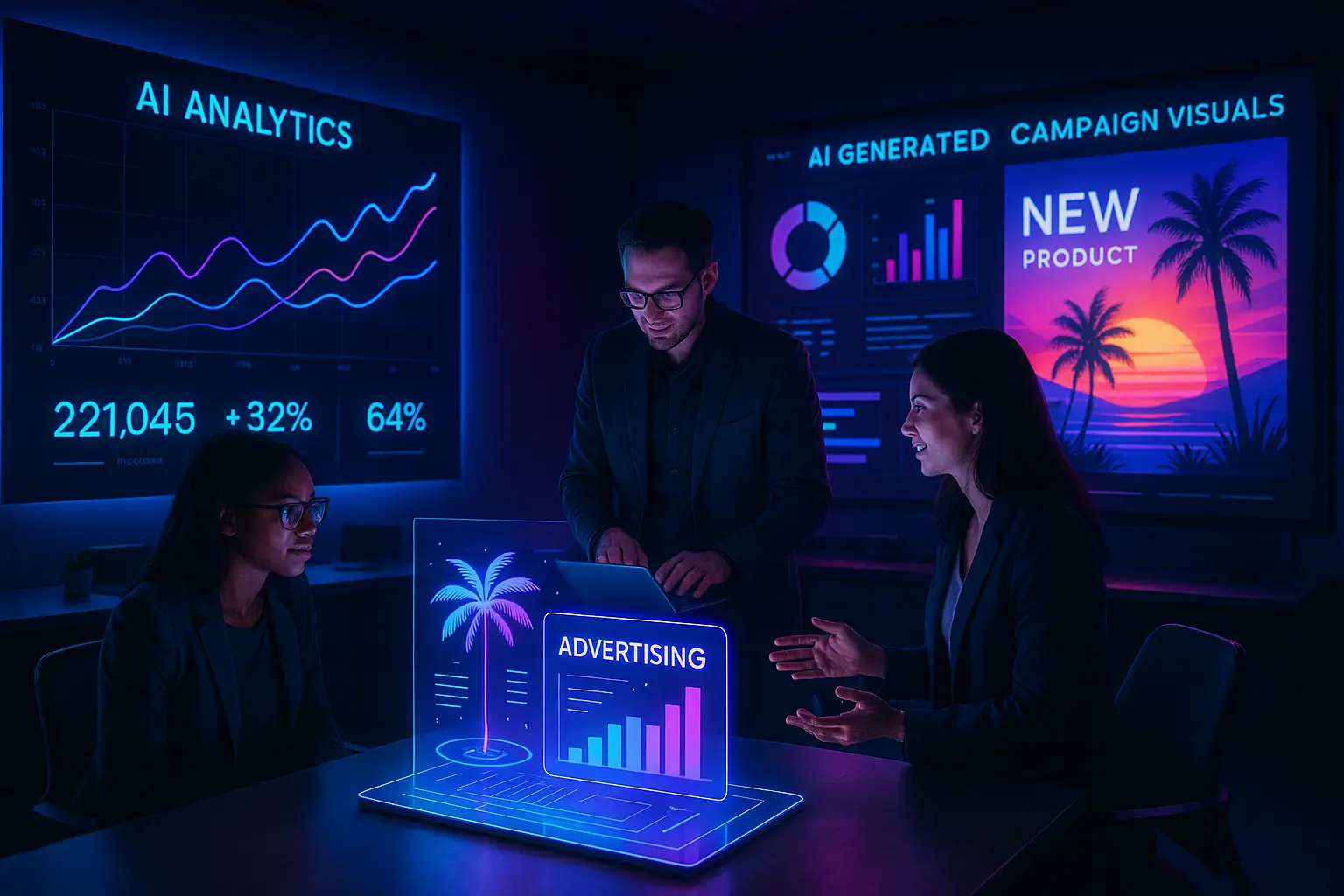
New data showing that 88 % of digital marketers now rely on AI daily—and that AI marketing spend could reach $47.32 billion by 2025—sparked heated discussions about whether generative content is helping or harming creative quality.
-
AI marketing spending is set to rise from US$12.05 billion in 2020 to US$47.32 billion in 2025, according to new research
-
A staggering 88 % of digital marketers say they use AI tools daily.
-
Industry leaders argue that AI allows for faster ideation and more time for human storytelling, yet some creatives worry it could lead to generic, soulless campaigns.
What happened
A comprehensive report on generative‑AI marketing tools went viral on LinkedIn and Hacker News, revealing that AI marketing spending has exploded over the last five years. The report notes that investments in AI for marketing grew from US$12.05 billion in 2020 to a projected US$47.32 billion by 2025, and that 88 % of digital marketers now use AI daily. The news quickly spread across X (Twitter) with the hashtag #AIMarketing trending as professionals debated whether AI is empowering or eroding creativity.
The report features interviews with marketing leaders. Jessica Hankinson, a senior graphic designer at Seven West Media, praised AI tools like ChatGPT and Midjourney. She said they let her team “generate high‑quality visuals quickly” and freed up time to monitor audience responses while ensuring authenticity. Another interviewee, Carly O’Keefe, who works on Jasper AI, argued that generative AI makes repurposing content easy and protects proprietary assets via closed systems.
Why This Matters
Everyday workers
Copywriters and small‑business owners can now produce professional‑looking ads without hiring big agencies. However, they must develop skills in prompt engineering and critical editing to avoid producing generic content. The surge in AI adoption also signals that non‑tech workers must adapt quickly to stay competitive.
Tech professionals
Developers of AI marketing tools see robust demand but also face criticism for producing homogenous visuals. As more marketers rely on AI, there’s an opportunity for engineers to build customisable, brand‑safe models and emphasise transparency and intellectual property protection.
For businesses and startups
Startups can reduce creative costs and speed time‑to‑market by using generative AI for ideation, iteration and localisation. The expected $47.32 billion in spending signals a lucrative market for AI SaaS vendors. However, brands must guard against over‑automation that diminishes authentic storytelling.
From an ethics and society standpoint
As AI marketing tools dominate, concerns arise over job displacement and algorithmic bias. Some fear that AI could reinforce stereotypes or reduce representation if not carefully trained. Companies must also consider environmental impacts of training large models.
Key details & context
-
Mass adoption: 88 % of digital marketers use AI every day.
-
Soaring spend: Marketing spending on AI projected to jump from $12.05 billion to $47.32 billion between 2020 and 2025.
-
Positive perspective: Jessica Hankinson says AI lets her design team generate visuals quickly while preserving the human voice.
-
Cautionary note: Carly O’Keefe highlights that AI tools simplify prompt refinement and repurposing but stresses the need to protect proprietary content.
Community pulse
“We’re hitting our campaign deadlines faster than ever,” wrote @MarketingMaven on LinkedIn. “AI drafts three mood boards in seconds—something that used to take us half a day.”
“I worry we’re replacing junior designers. It’s efficient but not always original,” commented u/BrandBuilder on Reddit, garnering hundreds of upvotes.
“So many of these AI‑generated ads look the same. Where’s the soul?” asked @CreativeSoul77 on Twitter, sparking a thread about authenticity in AI content.
What’s next / watchlist
Expect major marketing conferences to spotlight generative AI case studies. More companies will hire “prompt engineers” and AI‑ethics consultants. Regulators may examine whether AI‑generated content violates intellectual‑property laws or misleads consumers. We’ll also see AI vendors emphasise brand safety and personalisation to address concerns about homogenisation.
FAQs
-
Will AI replace human marketers?
AI automates repetitive tasks like drafting content and generating visuals, but human oversight remains essential for strategy, storytelling and brand nuance. Experts say AI frees teams to focus on creative direction. -
How can small businesses leverage AI marketing?
They can use tools like ChatGPT or Jasper to craft copy, Midjourney or Canva’s AI for visuals, and use AI analytics to tailor campaigns. Investing in prompt training helps extract better results. -
What are the risks of using AI in marketing?
Risks include loss of brand voice, copyright infringement, data privacy issues, and reinforcing biases. Companies should review outputs carefully and choose providers that protect proprietary content.